Monday, 9 August 2021

Isle of Wight trip 2021

Last week, I went on a holiday with my wife, daughter (Anya) and son (Reuben) to the Isle of Wight, a small island off the coast of mainland Britain in the south of the country. This was my third visit to the island in twenty years and, just like previous times, I enjoyed it very much. Here's trip report.

Monday 2 August 2021

Drove down to Portsmouth to catch our 11.40am carry ferry to Fishbourne. Despite a longer than expected queue of cars at the ferry port, we made it onto our ferry on time. I've never seen the ferry so busy before. Perhaps a lot of UK holidaymakers have chosen to stay in the country, deterred by the costs and complexities of going abroad during this COVID-19 pandemic. Our ferry, called St Clare, took forty minutes to do the crossing across the Solent (strait of English Channel between the mainland and the Isle of Wight). The weather, which was windy and rainy during the journey, thankfully cleared up by the time we disembarked.

We headed straight to the Isle of Wight Animal Sanctuary, previously known as the Isle of Wight Zoo, in Sandown. This is not a big zoo. One can walk around it within half an hour. Yet it was charming with it's collection of different animals and feeding times with running commentary. The main attraction were the big cats: lions and tigers, all of which had been rescued from captivity. We stayed for the big cat feeding time to watch the lions being fed, and then headed to our hotel, Premier Inn Isle of Wight Sandown (Merrie Gardens).

The hotel staff were friendly enough. Our family room was sufficient, albeit a bit small, and there were some shops like Aldi and Morrisions nearby. After unloading our luggage, we drove to Sandown Beach. Anya and Reuben enjoyed playing on the beach for a little while. Then when hunger pangs set in, we went in search of some place to eat. 

Walking through the streets of Sandown, one could see a number of desolate shops and hotels. Did they close because of the pandemic I wonder? I guess things must have been pretty tough for an island so dependent on tourism. We ended up back at the beach by the pier where we bought burgers and chips, which we ate in our car together. The long wait for the food was worth it in the end, for it was filling indeed, putting to shame what we normally get from McDonalds. Finally we retired to our hotel room.

Tuesday 3 August 2021

Enjoyed a hearty full English breakfast in the hotel breakfast room. There was a good selection of full English and continental items, and I just couldn't help treating myself to a second serving. Then we drove across the island, along meandering roads past woods and countryside, to the Needles Landmark Attraction on the west coast. The weather, bright and sunny, was just perfect. One of the first things we did was take the chair lift down to the beach. Reuben sat with his mum on the chair lift so coolly. I was pleased to see that he wasn't frightened. He played with his sister once he got onto the beach, throwing pebbles into the water. We could see the Needles in the distance and it made for a beautiful sight. We took a boat ride out to the Needles and back with other tourists. That was fun. Then we returned to the Needles park where we took Reuben to the sand shop. There he filled a star shaped glass container with different coloured Allum Bay sands. This was a souvenir for him to take back home.

By early afternoon, the Needles park was getting quite busy and we were quite happy to leave the place to go over to Havenstreet in the east to catch our Isle of Wight Steam train. Nestled in a wooded area, Havenstreet Station was an oasis of calmness and a throwback to a bygone era of steam railway. Our train left Havenstreet at 2.33pm and went to Smallbrook Junction, crossing beautiful countryside and woods. At Smallbrook Junction, the steam engine changed ends and the train went back along the same track to Havenstreet and then to Wootten. Then at Wootten, the engine changed ends again and took us back to Havenstreet. Sitting in our compartment, watching the scenery roll past, listening to the hiss of the engine and the occasional whistle, made for a most relaxing and enjoyable journey. The Isle of Wight Steam Railway is manned by retired volunteers and they are generally quite friendly.

In the evening, we visited Shanklin Beach, not far from Sandown. Memories of my last trip with Mum and Dad came back to me. I missed my Mum, who sadly passed away three years ago. Like Sandown, Shanklin is a sandy beach but, unlike Sandown, it seemed much more alive. Along the promenade I saw lots of restaurants, shops and hotels, all buzzing with life. Anya and Reuben again played in the sand before we sat down and ate our sandwiches.

Wednesday 3 August 2021

After breakfast, we made our way to Tapnell Farm Park near Yarmouth in the west of the island. Reuben was in for a real treat here. Tapnell Farm Park is a great place for kids with loads of things to do, surrounded by nice countryside and sea views. There are animals such as wallabies, goats and donkeys in paddocks, as well as indoor and outdoor play areas. Reuben liked the soft play area, the bouncy pillow, zip wire and go karting. He was less interested in the animals. After a good two hours of fun, we headed over to Appleby beach on the north side of the island near Ryde.

Appleby Beach, another sandy beach, with a nice paved promenade and green park beyond is a treat to the eye. Facing north, we could see Portsmouth across the Solent. In between, there were yachts, ships and other vessels of various sizes crisscrossing the water. When we arrived, the tide was low. So Anya and Reuben could have an extended period of play in the shallow water. Sitting on a bench in the shade of the park, I savoured the scene; it was so nice and relaxing. A welcome break from London life.


Thursday 4 August 2021

At breakfast this morning, we met a waitress who had just moved to the Isle of Wight from Oxford. She said she used to enjoy visiting the island when she was young. We checked out of our hotel and travelled north to the ferry port in Fishbourne. Although we were booked for the 10.40am ferry, we were early enough for the 10am ferry and were allowed to board that. The ferry, called the Victoria of Wight, was far less busy than the one we took to the island. We also enjoyed some good weather during the crossing, which meant we got a good view across the Solent.

Once we reached Portsmouth, I drove around the city where I once worked. We passed the area where I used to jog along the beach and stopped in a car park next to Clarence Pier, an amusement pier, where Anya and Reuben enjoyed a ride on the Flying Dumbos. From a stall I bought doughnuts and churros before finally heading back home to London.

Final thoughts

Overall, a very enjoyable holiday. It was the just the right place for our young Reuben, who had a great time. It was nice to get away from busy London and the usual routine for just a week. The break was quite rejuvenating, epecially after one year of the pandemic.


Tuesday, 23 December 2014

Merry Christmas

Merry Christmas to you and your families.

May your hearts be filled with joy and happiness this Christmas season, for it is a special occasion. A time of warmth, friendship, laughter, festivity and, above all, celebration.

It doesn't matter how many years have passed since that momentous day in Bethlehem 2,000 years ago, but the joy and wonder of it still shines through. God so loved the world that He sent His only begotten Son, so that all who believes in him may not perish but may have eternal life.

Let's keep the true meaning of Christmas in our hearts.

Pope Benedict XVI expresses it clearly in these words:

"God is always faithful to his promises, but he often surprises us in the way he fulfills them. The child that was born in Bethlehem did indeed bring liberation, but not only for the people of that time and place - he was to be the Saviour of all people throughout the world and throughout history. And it was not a political liberation that he brought, achieved through military means: rather, Christ destroyed death for ever and restored life by means of his shameful death on the Cross. And while he was born in poverty and obscurity, far from the centres of earthly power, he was none other than the Son of God. Out of love for us he took upon himself our human condition, our fragility, our vulnerability, and he opened up for us the path that leads to the fullness of life, to a share in the life of God himself. As we ponder this great mystery in our hearts this Christmas, let us give thanks to God for his goodness to us, and let us joyfully proclaim to those around us the good news that God offers us freedom from whatever weighs us down: he gives us hope, he brings us life."


Monday, 22 September 2014

Book review: "Flat Earth News: An Award-winning Reporter Exposes Falsehood, Distortion and Propaganda in the Global Media" by Nick Davies

For anyone interested in knowing how the media works, I would recommend reading Nick Davies’ excellent book “Flat Earth News: An Award-winning Reporter Exposes Falsehood, Distortion and Propaganda in the Global Media”. Davies is a veteran British journalist who has seen all the changes in his industry over the last few decades. The picture he paints is not a pretty one. Much of the changes have not been for the better, such that today the mass media operates like a “global village idiot, deeply ignorant and easily led.”

From the Millennium Bug to the existence of WMD in Iraq, used to justify the 2003 invasion of Iraq, the media has not told the truth and engaged in what Davies calls “Flat Earth News”. This is when “a story appears to be true. It is widely accepted as true. It becomes heresy to suggest that it is not true – even if it is riddled with falsehood, distortion and propaganda.” It seems that the media’s role in the build-up to war in 2003 is what compelled Davies to write this book and investigate why truth telling has disintegrated into the way it has. He is aided by a specially commissioned team of researchers from Cardiff University.

What has led to falling standards in the media over the years? Why are journalists today failing to perform the basic functions in their profession such as fact checking and instead recycling second-hand wire copy and PR material? The author traces this trend to the 1960s when the new corporate owners began taking over newspapers and imposing their commercial logic on the industry. The “grocers” as the author likes to call them, such as Rupert Murdoch, cut costs and more costs over time to improve their profits, and at the same time increased the content of newspapers, which resulted in less fact checking and more “churnalism”.

It is not just British newspapers but newspapers across the world that have suffered the same plight as their British counterparts. This means that Flat Earth News has gone global. The fall in quality has made it easier for PR companies and the covert world of intelligence agencies to infiltrate the media. He cites the case of the “NatWest Three” as an example of PR at work. A very successful PR campaign transformed the image of three very corrupt employees of NatWest Bank, who were involved in a scam, into poor innocent victims of American law when faced with the prospect of extradition to the US. There is a whole chapter dealing with the production of propaganda in the media, which is nothing new but seems to have grown significantly since 9/11 without much public debate. Davies is careful to point out, however, that much of the distortion is done by feeding unsuspecting journalists than through directly controlled assets.

The various unwritten rules of news production are laid bare: prefer cheap safe stories, especially with statements from official sources, to tricky expensive ones; avoid the electric fence of the Official Secrets Act and, to a larger extent, libel law; fit the surrounding consensus and give them what they want to hear even if it’s not true; always give both sides of the story just as a safety net;  go along with moral panic; and run stories which are being widely published elsewhere (“Ninja Turtle Symdrome”). When journalists don’t toe the line they can face the consequences – as Andrew Gilligan found out when his story attacked the government for its handling of the intelligence on Iraqi weapons.

Nick Davies is credited for his part in exposing the phone hacking scandal and he touches upon it here in a chapter on the “dark arts”. From bribing police officers and civil servants to using private investigators, the author gives a disturbing insight into the world of the dark arts. It is true that the dividing line as to what is legal and illegal is ill defined, but the greater problem is the greed of newspapers for wanting to make money out of confidential and salacious information.

Nick Davies
The book is very well researched and skilfully written with plenty of examples to back up the author’s points. Indeed, it is the examples in the book that make it such an interesting read. There is a chapter each on three of the most well known British newspapers – The Sunday Times, The Observer and The Daily Mail; unfortunately none of them make for comfortable reading. The seesaw in fortunes of the Insight Team at The Sunday Times, which famously exposed the MI6 agent Kim Philby of being a KGB operative, is a particularly interesting tale that mirrored the change in ownership of the newspaper and its priorities. Although Davies is primarily a Guardian man, he tries to be as objective as possible, criticising both right-wing and left-wing newspapers, but it’s clear he is no fan of Rupert Murdoch.

For those people who have long suspected some falsehood and distortion in the media, this book gives adequate credence to that view. It is not so much that journalists deliberately set out to tell lies, but more the case that circumstances, driven by commercial interests, have led to the current state of affairs. With less time to file their stories, less resources at their disposal and the pressure to adhere to the production rules, truth telling has suffered. Davies doesn’t finish on an optimistic note and I share his pessimism. Everything he has described in the book, he confesses, seems to be symptoms of a disease that has set in and just seems to be getting worse. The book is both an illuminating and depressing account of our global media.

Monday, 2 June 2014

Something to think about...

1. Stay away from anger…It hurts…Only You!

2. If you are right then there is no need to get angry, and if you are wrong then you don’t have any right to get angry.

3. Patience with family is love; patience with others is respect. Patience with self is confidence and patience with GOD is faith.

4. Never think hard about the PAST, it brings tears…Don’t think more about the FUTURE, it brings fears…Live this moment with a smile, it brings cheers.


 5. Every test in our life makes us bitter or better, every problem comes to make us or break us. The choice is ours whether we become victims or victorious.

6. Beautiful things are not always good but good things are always beautiful.


7. Do you know why God created gaps between fingers? So that someone who is special to you comes and fills those gaps by holding your hand forever.


8. Happiness keeps you sweet, so try and be as happy from within as possible.


9. God has sent us all in pairs…someone somewhere is made for you…so wait for the right time and right moment.

Monday, 5 May 2014

Easter holiday in Barcelona and Montserrat

Wednesday 16 April 2014

Sagrada Familia
A pre-booked taxi took us to Gatwick Airport early in the morning. Our flight on Vueling Airlines was half an hour late. However, the pilots seemed to make up for the delay on the flight to Barcelona. We landed in blazing sunshine with hardly a cloud in the sky. The airport was clean and spacious. A taxi took us to our hotel, Acta Antibes, in the centre of the city. Seeing the palm trees and dry sundrenched surroundings, there was a distinctly Mediterranean feel to the place. We checked into our hotel and then went to a local restaurant for lunch. Later in the afternoon, when the sun’s rays were less intense, we walked up to the Sagrada FamiliaAntoni Gaudi’s most celebrated building.

There were plenty of tourists, including many youngsters, milling around the Sagrada Familia with its tall towering spires. The church was nothing like what I had seen before: a peculiar mix of Gothic, modernism and naturalistic features. There were three façades, each with a different biblical theme: the Nativity, the Passion, and the Glory (representing the road to God). Building work is still ongoing and is expected to be complete only by 2026. We also visited the Arc de la Triomf and Parc de la Ciutadella. Walking along the streets, with its wide tree lined pavements and central pedestrian walkways, there was a relaxed, unhurried atmosphere which we liked.

Thursday 17 April 2014

A view of the city with the Columbus Monument
We had breakfast in a local café managed by two friendly ladies. At 9am our tour guide, Marta, greeted us at the hotel reception. She was a middle aged woman with shoulder length frizzy brown hair, tanned complexion and slight American accent. She was delighted to hear my surname Ignatius, which is Ignacio (pronounced “Ignathio”) in Spanish. In the tour bus she explained that she was born in Barcelona and raised in America before settling in the city of her birth after university. Her father was Spanish while her mother came from Puerto Rica. Two American families joined us on our tour. Marta gave a good running commentary of the city and its history as we toured it, visiting the main attractions including the National Palace, Montjuic (“mountain of the Jews”), the Columbus Monument, Port Olympic (marina, shops, restaurants, galleries, etc), Park Guell, La Pedrara, Passeig de Gracia, Plaza Catalyunya and the Sagrada Familia.
Park Guell

It was interesting to note that Freemasons had a role in the planning of the city with its equidistant blocks. Gaudi’s financial patron, Eusebi Güell, was also a Freemason and there were clearly Masonic symbolism in Park Guell. The death of the dictator Franco and the Olympic Games in 1992 are the two main events, said our tour guide, that transformed Barcelona to the vibrant, modern, outward looking city it is today. After checking out of our hotel and eating lunch in a local restaurant, we took the train to Monistrol de Montserrat, about an hour’s journey from Barcelona. In the background of our hotel, Hostal Guilleumes, was the famous mountain of Montserrat.

Friday 18 April 2014

We were now in the heart of Catalonia, where people speak Catalan rather than Spanish. Like Scotland in the UK, Catalonia is a region which is peacefully and determinedly asking for independence. After breakfast we walked to the train station and took the rack railway all the way up to Montserrat. We were joined on the train by many young families and their children. The journey uphill, meandering along the side of the mountain, was quite exciting.

Montserrat
Montserrat is famous for its Benedictine abbey, Santa Maria de Montserrat, which hosts the famous Virgin of Montserrat - a black statue of the Virgin Mary and infant Jesus. The views from atop the mountain were simply stunning. Being a public holiday, the place was overflowing with people, some of whom were international tourists like us. We waited patiently in the queue to see La Moreneta ("the little dark-skinned one") and eventually we got our opportunity. Over the centuries many saints, including St Ignatius of Loyola, and popes have visited the shrine. We joined the Good Friday Passion Service at 5pm in the basilica. Then after lighting a candle, praying for our intentions, and buying a book, we returned to Monistrol de Montserrat. What a way to spend Good Friday and Nithya’s birthday in this holy of places with stunning views!

Saturday 19 April 2014

After a filling breakfast, we checked of our hotel and made our way on foot to the train station. As we sat waiting for our train back to Barcelona, a young lady greeted us by saying “hola” (Spanish for “hello”). As a Londoner, I wasn’t expecting this. Spain is a very different country to Britain. Here people are less reserved and more family oriented. They work to live rather than live to work. Businesses are small to medium sized enterprises and work-life balance is important. The main meal is at lunch time, which is normally a three course meal, and that is accompanied by a siesta, after which people return to work and finish late.

Our hotel in Barcelona this time was Tres Torres Atiram, situated in a quiet residential area surrounded by posh apartments in the north east of the city, not far from Barcelona FC Stadium. I wanted to find the way to Maria Reina Church, close to the Monastery of Pedralbes, which offered an English mass on Sundays. As we walked along the salubrious surroundings we realised we were in an affluent area of the city. We found the church okay and then returned via a meandering route, stopping along the way at a restaurant to have some nice ice cream.

Sunday 20 April 2014

The hotel provided a good selection of continental style food for breakfast. We checked out and walked to Maria Reina Church for the 10.30am Easter Sunday mass. We had enjoyed nice sunny dry weather up to this point, but today the skies were overcast and rain threatened to be spoil sport. The church, situated on a slightly elevated level relative to the entrance gates, with verandas on both sides, reminded me of the tranquil grounds of Province College in Calicut.
Maria Reina Church

We thought we were going to be the only people at mass until the last fifteen minutes before it was due to start. The priest, who we met prior to the service, was an elderly Jesuit who had spent many years in Bombay but was born in Kilburn, London. After mass, we joined people for tea and cake. The majority of people were clearly Americans but there was also a family from Kerala, who we talked to.

Transportation and food costs are considerably cheaper in Spain than in UK. We took the train to Barcelona Airport and, after checking in, we enjoyed the final meal of our holiday in a tapas restaurant. It had been a most enjoyable Easter holiday and we had come to like Spain. The country, with its people, culture, and lifestyle had endeared us to it. I was keen to visit Spain again sometime in the future, and probably to a different part of the country.

Sunday, 30 March 2014

Britain's increasing inequality

I thought the days of Charles Dickens' Oliver Twist were over, but obviously not. A report by the charity Oxfam has found that the five richest families in the UK are wealthier than the bottom 20% of the entire population and the gap between the rich and the rest of the population has grown significantly over the last two decades.

According to the report:
The agency warned that just five UK households have more money than the poorest 12.6 million Britons - almost the same number of people as those living in households below the UK poverty line.
Oxfam's figures also show that over the past two decades the wealthiest 0.1 percent have seen their income grow nearly four times faster than the least well off 90 percent of the population. In real terms, that means a wealthy elite have seen their income grow by £24,000 a year, enough to buy a small yacht or a sports car, whilst the bottom 90 percent of Britons' incomes have gone up by only a few pounds a week. The average UK salary is £26,500-a-year.

Ben Phillips, Oxfam's Director of Campaigns and Policy, said: "Britain is becoming a deeply divided nation, with a wealthy elite who are seeing their incomes spiral up, whilst millions of families are struggling to make ends meet.

"It's deeply worrying that these extreme levels of wealth inequality exist in Britain today, where just a handful of people have more money than millions struggling to survive on the breadline."  

Growing numbers of Britons are turning to charity-run foodbanks, yet at the same time the highest earners in the UK have had the biggest tax cuts of any country in the world.
With billions in welfare cuts still to come and increasing pressure to offer more tax cuts for the rich, the charity is asking all political parties to audit how their emerging policies would affect economic inequality in the UK.

Britain's five richest families

1 Duke of Westminster (£7.9bn) is UK’s richest landlord. Owns 190 acres in Belgravia.

2 Reuben brothers (£6.9bn)  Self-made Monaco-based billionaire brothers Simon and David, with money in property.

3 Hinduja brothers (£6bn) London-based Srichand and Gopichand run Hinduja Group involved in industries from trucking to banking.

4 Cadogan family (£4bn) Former Chelsea FC chairman, owns Cadogan Estates and most of Chelsea in West London.

5 Mike Ashley (£3.3bn) Sports Direct chief, Newcastle United owner.

Worldwide problem

Of course, inequality is not a UK specific problem. There are growing levels of inequality in other countries too. Indeed, we seem to be living in a world in which the tiny super rich seem to lord it over the rest of us.

Oxfam warns that "extreme inequality is creating a vicious circle where wealth concentrated in the hands of a few is used to buy political influence which is used to rig the rules in favour of a small elite and perpetuate inequality."

"Such extreme inequality is to the detriment of social mobility and is also increasingly understood to undermine both the pace and sustainability of economic growth."


Sunday, 3 November 2013

St. Martin de Porres

Today is the feast day of St. Martin de Porres, one of the greatest saints in the pantheon of Catholic saints. He is the patron saint of barbers and social justice. Here is a short biography of his life.

Martin was born December 9, 1579, in Lima, Peru, as the illegitimate son of a Spanish nobleman and a young, black former slave born in Panama. He grew up in poverty and, at age 12, his mother apprenticed him to a barber-surgeon. He learned how to cut hair and also how to draw blood (a standard medical treatment then), care for wounds, and prepare and administer medicines.

At age 15, Martin applied to the Dominicans to be a “lay helper,” not feeling himself worthy to be a religious brother. After nine years, the example of his prayer, penance, charity and humility led the community to request him to make full religious profession. Many of his nights were spent in prayer and penitential practices; his days were filled with nursing the sick and caring for the poor. It was particularly impressive that he treated all people regardless of their color, race or status.

He was instrumental in founding an orphanage, taking care of slaves brought from Africa, and managing the daily alms of the priory with practicality as well as generosity. He became the procurator for both priory and city, whether it was a matter of “blankets, shirts, candles, candy, miracles or prayers!” When his priory was in debt, he said, “I am only a poor mulatto. Sell me. I am the property of the order. Sell me.”

Among the many miracles attributed to him were those of levitation, bilocation, miraculous knowledge, instantaneous cures and an ability to communicate with animals. St. Martin is often depicted as a young mulatto priest with a broom, since he considered all work to be sacred no matter matter how menial. He is also often shown with the dog, the cat and the mouse, eating in peace from the same dish.

He died in Lima, Peru, on November 3, 1639. On his canonization in 6 May in 1962, Pope John XXIII remarked of him:
"He forgave the bitterest injuries, convinced that he deserved much severer punishments on account of his own sins. He tried with all his might to redeem the guilty; lovingly he comforted the sick; he provided food, clothing and medicine for the poor; he helped, as best he could, farm labourers and Negroes, as well as mulattoes, who were looked upon at that time as akin to slaves: thus he deserved to be called by the name the people gave him: 'Martin of Charity.'"

Saturday, 14 September 2013

People who gossip are cowards and hypocrites, says Pope Francis


People who judge and criticise others are hypocrites and cowards who are unable to face their own defects, Pope Francis has said.

Gossip, too, is “criminal” as it destroys, rather than exalt the image of God present in others, he said in his early morning homily today (September 13) at his residence of Domus Sanctae Marthae.

“Those who live judging their neighbours, speaking badly of them, are hypocrites because they don’t have the strength, the courage to look at their own defects,” he said.

“Why do you notice the splinter in your brother’s eye, but do not perceive the wooden beam in your own,” he said, referring to the day’s Gospel reading according to St Luke.

Every time “we judge our brothers and sisters in our heart, and worse, when we talk about it with others, we are killer Christians”, imitating Cain who committed “the first homicide in history”.

Gossip, too, has “this dimension of criminality” because there is no such thing as “innocent gossip”, he said. “If one of us gossips, certainly he is a persecutor, someone violent.”

St James the Apostle said the tongue is for praising God, “but when we use our tongue to speak badly of our brother or sister, we use it to kill God,” he said, killing “the image of God in our brother”.

Instead, people need to pray and do penance for others and, he said, “if it’s necessary, speak to the person who can solve the problem. Don’t tell everybody about it.”

People need “a gesture of conversion,” he said, because just as St Paul was “a blasphemer and a persecutor and an arrogant man” he was “mercifully treated”.

The Pope asked people to pray for “the grace of conversion from the criminality of gossip to love, humility, meekness, gentleness and the magnanimity of love toward the other”.

Source: Catholic Herald

Saturday, 31 August 2013

The dream

Fifty years ago on 28 August 1963 Martin Luther King delivered his Dream speech. It was a momentous speech which stirred the moral conscientiousness of millions. This is what he said:
I say to you today, my friends, that in spite of the difficulties and frustrations of the moment, I still have a dream. It is a dream deeply rooted in the American dream.
I have a dream that one day this nation will rise up and live out the true meaning of its creed – we hold these truths to be self-evident: that all men are created equal.

I have a dream that one day on the red hills of Georgia the sons of former slaves and the sons of former slave-owners will be able to sit down together at a table of brotherhood.

I have a dream that one day even the state of Mississippi, a desert state, sweltering with the heat of injustice and oppression, will be transformed into an oasis of freedom and justice.

I have dream that my four little children will one day live in a nation where they will not be judged by the colour of their skin but by the content of their character.

I have a dream today!

I have a dream that one day, down in Alabama, with its vicious racists, with its governor having his lips dripping with the words of interposition and nullification; one day right there in Alabama little black boys and little black girls will be able to join hands with little white boys and white girls as sisters and brothers.

I have a dream toady!

I have a dream that one day every valley shall be exalted, every hill and mountain shall be made low, the rough places will be made plain, and the crooked places will be made straight, and the glory of the Lord shall be revealed, and all flesh shall see it together.
This is our hope. This is the faith that I will go back to the South with. With this faith we will be able to hew out of the mountains of despair a stone of hope.

With this faith we will be able to transform the jangling discords of our nation into a beautiful symphony of brotherhood. With this faith we will be able to work together, to pray together, to struggle together, to go to jail together, to stand up for freedom together, knowing that we will be free one day.

This will be the day, this will be the day when all of God’s children will be able to sing with a new meaning: “My country, ‘tis of thee, sweet land of liberty, of thee I sing. Land where my fathers died, land of the pilgrim’s pride, from every mountainside, let freedom ring.” And if America is to be a great nation, this must become true.

And so let freedom ring from the prodigious hilltops of New Hampshire. Let freedom ring from the mighty mountains of New York. Let freedom ring from the heightening Alleghenies of Pennsylvania!
Let freedom ring from the snow-capped Rockies of Colorado.

Let freedom ring from the curvaceous peaks of California.
But not only that.
Let freedom ring from the Stone Mountain of Georgia.
Let freedom ring from Lookout Mountain of Tennessee.
Let freedom ring from every hill and every molehill of Mississippi, from every mountainside, let freedom ring!
And when this happens, when we allow freedom to ring, when we let it ring from every village and every hamlet, from every state and every city, we will be able to speed up that day when all of God’s children, black men and white men, Jews and Gentiles, Protestants and Catholics, will be able to join hands and sing in the words of the old Negro spiritual: “Free at last! Free at last! Thank God Almighty, we are free at last!”

Rev Dr Martin Luther King Junior, a 34 year old Baptist pastor and civil rights leader, was joined by 250,000 of his fellow Americans and delivered his speech in front of the Lincoln Memorial in Washington DC, USA, to commemorate the centenary of President Abraham Lincoln’s ‘Emancipation Proclamation’ to free African-Americans, which made the removal of slavery an explicit goal. His aim was to argue that the freedoms promised by President Abraham Lincoln to the newly-emancipated African-Americans never really materialised and encourage all Americans to re-commit themselves to the Emancipation Proclamation’s original promise. This was at a time when although African Americans had been given legal citizenship they remained second-class citizens. Many continued to face legal, political, social and economic discrimination and segregation, from businesses and government in places like buses, libraries, swimming pools, lunch counters and hotels. They faced extreme poverty and in some places they were prevented from voting through intimidation and violence.

The speech came amid increasingly intense battles to end segregation in the South – where civil rights activists’ commitment to the principles of nonviolence advocated by Martin Luther King were severely put to the test. The March on Washington was organized by hundreds of union and labour and religious organizations, who worked to fundraise for the march calling for ‘jobs and freedom’. The March was supported by the presence of Hollywood celebrities. It was strongly opposed, however, by the US government.

It is estimated that around 75% of the 250,000 participants were black while the rest were white. Most White Americans had never seen such a large demonstration organised by Black Americans with a message of tolerance, peace and determination.

The march was one of the largest political rallies for human rights, civil rights and economic rights in the history of the United States and was critical in assisting the passing of the Civil Rights Act 1964 and the Voting Rights Act 1965, which outlawed discrimination in every part of American life, including the ballot box.

The speech proved to be an important tipping point for American civil rights. It has gone on to resound throughout the world – in Africa, Asia, Australia, Europe and South America, as an appeal for racial justice and equality. Fifty years later, it has a relevant message for us today.

Sunday, 30 June 2013

No trouble that you face is out of God's control


 "No trouble that you face is out of God's control. The waves that come against you can only go so high, and their force can only be so strong. They will not be able to overturn your ship of faith or blow you off course as you keep your trust in the Lord. In His time, the waves will subside, the winds will be subdued, and all will be quiet again."

Sunday, 9 June 2013

A trip to Paris and Disneyland

We had a pleasant four day trip to Paris including Disneyland. Everything went smoothly and we had a nice time. As it was the half-term holidays in the UK, there were lots of other families traveling to Paris with their young children. This was the first time we traveled by the Eurostar. Not only was it convenient, fast and comfortable, but we didn’t have to endure intrusive airport style security.

Paris is a beautiful city. It has elegant buildings and tree lined roads. There are lots of cafes, bakeries and restaurants. The Metro provides an easy and effective way of getting around the city. The city’s population is diverse with a significant number of immigrants from France’s former colonies. The only problem is everything is quite expensive.

We visited two famous churches: the Chapel of Our Lady of the Miraculous Medal and the Sacré-Coeur Basilica. Even though France is a secular republic these days, I felt an atmosphere of holiness in both these places. The Chapel of Our Lady of the Miraculous Medal is where Mother Mary appeared to a young French nun, St Catherine Labouré, just before the French Revolution; and Sacré-Coeur is the magnificent basilica built in reparation for France’s sins following the Franco-Prussian war in the 19th century. The basilica was dedicated to the Sacred Heart of Christ or Sacré Coeur. As the basilica is situated on top of a high hill - Montmartre - we got the most stunning views of Paris from there.

We spent three days at Disneyland on the outskirts of Paris. There were many children, mainly from France and other European countries, with their parents. Disneyland was a trip into a fantasy world. There were lots of rides and attractions. Sometimes we would encounter familiar Disney characters, and in the evenings there would be a parade of them all. A few of the rides were quite scary. We watched a most entertaining stunt show involving professional stunt men on motorbikes and cars. There was a bit of rain but, as the park is made to cope with that, that did not spoil our tour.

Anya enjoyed Disneyland. It is fun for children and even adults too, but scratch under the surface and you see an extremely lucrative business for the Walt Disney Company. Everything connected with the park including park tickets, food, drinks and merchandise is expensive. It was a celebration of Walt Disney and American culture. For me, one visit was enough. This was a trip mainly for Anya, and I was glad that she enjoyed it.

Here are some photos I took.

On the steps of Sacré-Coeur Basilica

A stunning view of Paris from the top of Sacré-Coeur
Disneyland Railroad Train
About to board the Orbitron
The Castle of The Beauty Sleeping in the Wood
Parade of Disney characters

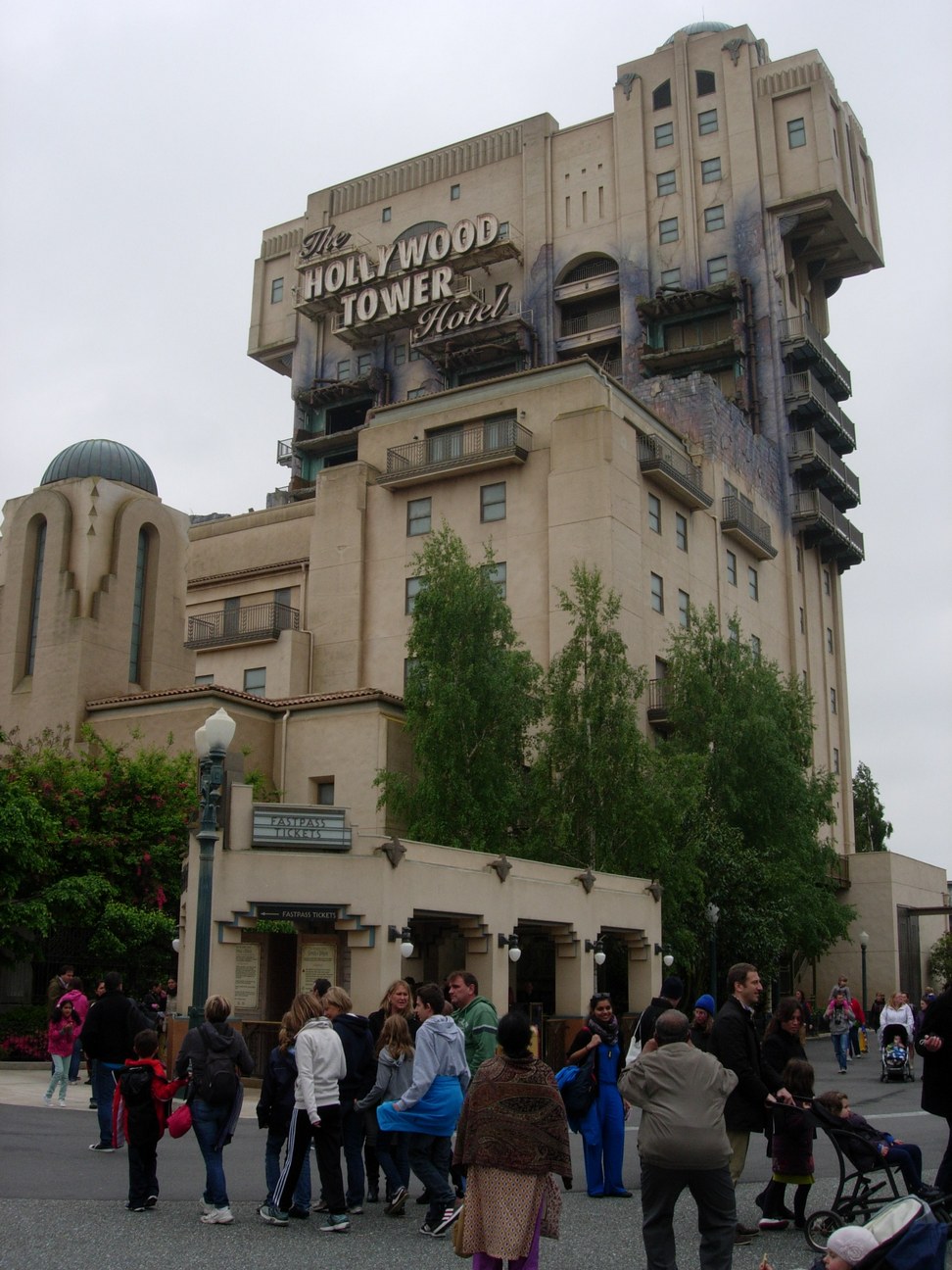
The Twilight Zone Tower of Terror

Sunday, 7 April 2013

Easter in Walsingham

As a special way of celebrating Easter this year we decided to visit the Roman Catholic National Shrine of Our Lady of Walsingham. We had been meaning to make a visit there for some time, and since my father-in-law was unwell after suffering a stroke we decided the time was right for the trip. So we headed to the small village on the north coast of East Anglia on Saturday 30 March, stopping at the capital city of Norfolk, Norwich, for the night.

Walsingham countryside
The Roman Catholic shrine is set in a peaceful country setting; as we walked down the narrow road that led to it, we passed many fields wherein sheep grazed and bleated. It was a cold day, and we had to walk a mile from the High Street. We offered our labour as kind of penance like pilgrims did in medieval times.

We went straight to the Chapel of Reconciliation where we celebrated mass with other worshippers, many of whom had obviously travelled far. There were many people of Sri Lankan Tamil and Filipino descent. The readings, the songs, the priest’s sermon and of course the location all combined to make the mass a fitting celebration of Easter. I had an overwhelming feeling of holiness, peace and community in that chapel.
Chapel of Reconcilation

After mass, we had lunch in the tea room. Then we visited the gift shop, the Slipper Chapel and the Chapel of the Holy Spirit before making our way back to our car and starting our long journey back home. We thoroughly enjoyed the trip to England’s national Catholic shrine, which was once known as ‘England’s Nazareth’. As a Catholic it is heartening to see that Walsingham is once again seeing something of a revival despite its tumultuous past.

History of the Shrine

Richeldis de Faverches
The Shrine of Our Lady of Walsingham was established in 1061, when according to tradition Richeldis de Faverches prayed that she might undertake some special work in honour of Our Lady. In answer to her prayer the Virgin Mary led her in spirit to Nazareth, showed her the house where the Annunciation occurred and asked her to build a replica in Walsingham to serve as a perpetual memorial of the Annunciation.

The Holy House was built in Walsingham and around 1130 a community of Augustinian Canons took charge of the foundation and Walsingham became one of the notable Shrines in medieval Europe. All the kings of England from Henry III (1226) to Henry VIII (1511) came to Walsingham on pilgrimage. In 1538 the Reformation caused the Priory property to be handed over to the King’s Commissioners and the famous statue of Our Lady of Walsingham was taken to London and burnt. Nothing remains today of the original shrine, but its site is marked on the lawn in “The Abbey Grounds” in the village.

Our Lady of Walsingham
After the destruction of the Shrine, Walsingham ceased to be a place of pilgrimage. In 1896 Charlotte Pearson Boyd purchased the Slipper Chapel outside the village and it was restored for Catholic use. A Shrine of Our Lady of Walsingham was built in the Church of the Annunciation in King’s Lynn and from there the first public pilgrimage to Walsingham, since the Reformation, came on 20th August 1897. In 1922 a new vicar, the Rev. Alfred Hope Pattern established a Shrine in the Parish Church of St. Mary. This was transferred to the newly built Anglican Shrine in 1931.

In 1934 Cardinal Bourne led a pilgrimage on 10,000 and declared that the National Shrine of Our Lady was to be at the Slipper Chapel. Since the 1950’s the Shrine of Our Lady has developed constantly and it has become firmly re-established as a place of pilgrimage and worship. Today over 250,000 people (pilgrims and tourists) visit the Roman Catholic Shrine each year. On most summer weekends there are Diocesan or other organisations’ pilgrimages taking place.

Slipper Chapel

Slipper Chapel
In the Middle Ages Walsingham was one of the four great shrines of Christendom with pilgrims coming from all parts of the known world. There were wayside chapels along the pilgrim route and the Slipper Chapel was the last and most important of these. Pilgrims stopped here to go to mass and to confess their sins before walking the last mile to the Holy House in Walsingham. The name of the chapel may come from the fact that pilgrims removed their shoes to walk the last mile or it may come from the word “slype” meaning a way through or “something in between”, the slype or slip chapel standing as it did between the holy land of Walsingham and the rest of England.

Sunday, 10 February 2013

Book review: "The White Tiger" by Aravind Adiga

One hears so much about the dazzling rise of India these days as a major economic power. What about Indian society itself and how is it being affected by globalisation? Aravind Adiga’s first novel - "The White Tiger" - which won the Booker Prize in 2008 is an interesting and entertaining tale about one Balram Halwai, born into a lowly family in Northern India, and how he manages to scale the heights of entrepreneurial success. Although fictional, every bit of the book is believable. Written as a letter to the Chinese Premier Wen Jiabao, Balram tells his tale in his own distinctive way. In the process he shines a light on the darker side of contemporary India from the poverty ridden villages to the rapidly growing urban centres.

Born as the son of a rickshaw puller in a small North Indian village, Balram Halwai’s life seems destined from the outset to be trapped in poverty and insignificance, but he nurses a dream to escape. And escape he does. His big break comes when he is employed as a driver for a wealthy village landlord’s son, recently returned from America, and his wife. Moving to Delhi, the bustling capital of India, with his master and wife, the city is a revelation to him with its frequent traffic jams, call centres, shopping malls, strange civic planning, five star hotels and slums. It seems that the rich can buy anything they want. A turning point seems to be when his master’s wife decides to leave her husband after a road accident, and it is then that the corrupting influence of the city has an effect on both master and servant.

According to Balram, India’s greatest invention is not the number system or chess but the Rooster Coop – the system by which 99.9% of the Indian population, despite being strong, talented and intelligent, live in perpetual servitude to a handful of men. Likening himself to a rare animal - a white tiger - that escapes its cage, Balram desires to break out of this coop. Feelings of loyalty to his master gradually give way to resentment and ambition. He eventually kills his master and runs away with a bag full of money which his master is about to pay a politician. With this money Balram heads south to Bangalore, where so many foreign companies are coming to these days, and makes a new life for himself. Seeing the opportunities present themselves in Bangalore, Balram Halwai, now renamed Ashok Sharma, makes a name for himself as the owner of a taxi service ferrying workers to their offices.

Balram clearly sees himself as an "entrepreneur" – a self-made man, a success in this world, and a white tiger. This is despite the fact that he has killed someone, which he justifies by saying that most men of stature have done the same. Here Adiga seems to be critiquing the ruling classes of India, some of whom are guilty of criminal activity.

Written in a simple way, mixed with a good deal of wit and humour, the book is an enjoyable read. It seems Adiga is deliberately caricaturising his main characters for greater effect. For example, the greedy village landlord is called the "Stork" and his son the "Mongoose". Issues surrounding caste, religion, politics, corruption, violence and globalisation are all exposed, laying bare the brutal realities of modern India. There is much to shock the reader and make him ponder.

This is not the kind of book many proud Indians would like reading, and indeed some have criticised the book as a Western conspiracy to malign India’s economic progress. I disagree. Just like Charles Dickens shone a light on the inequalities of Victorian Britain during the Industrial Revolution, Adiga manages to do something similar here. This book offers a riposte to the glamorised view of India portrayed by Bollywood. Adiga deserves credit for casting a sharp eye on modern India, however uncomfortable that may be, and telling a most interesting story. Congratulations to him for winning the prestigious Booker Prize

Tuesday, 5 February 2013

Iraq: Witness to Christ


Although Christians make up only 2% of the population in Iraq, the UN High Commission for Refugees reports that they make up 40% of the 1.6 million Iraqis in search of asylum abroad. This striking disproportion is caused by the persecution and almost total lack of protection suffered by Iraqi Christians: since 2003 about 2,000 Christians have been killed in multiple waves of violence throughout the country. Their number has plummeted from 900,000 before the invasion, down to approximately 200,000 today. Of those who remain in the country, many are internally displaced.

Sunday, 27 January 2013

A blanket of snow passes

It has been a cold fortnight here in Britain. After a very wet December the snow arrived with a vengeance a week ago. This caused lots of problems on the roads, trains, and in the airports. Many flights were canceled, cars abandoned, and schools closed. Why is that Britain seems to cope so much worse in wintry conditions than other Northern European countries?

The fun side of it for me was having a snowball fight with my young daughter in the back garden. Scooping up handfuls of snow and chucking it at each other, we quickly transformed our pristine snow covered garden into a mess. Driving around in the car was less fun. One had to be particularly careful on the smaller roads, which were not gritted.

Here are a few photos I took.


Now with milder more rainy conditions, the snow is fast turning to water. Hopefully this will not lead to floods.

Sunday, 9 December 2012

London Christmas Lights 2012

Last week we went to Central London with some friends to see the Christmas lights, which are an annual feature of the city during this season. We started our trip at Oxford Street, the busiest shopping street in Europe, and walked down to Bond Street passing Regent Street and Carnaby Street on our way.

There were plenty of people. Some were shoppers, some were tourists, and some, like us, who had just come to see the lights. Walking along the pavements, looking at the lights all around, one had to be careful not bump into other people.

There was a wide variety of colourful lights on display: they hung on street lamps, over the front of shops, and across the roads, suspended on wires. The lights on some of the big shops like John Lewis and Selfridges looked quite spectacular.

It was an interesting and enjoyable outing. We walked a lot but with so much to see we didn't it mind it at all. My nine year old daughter especially enjoyed the trip. The dazzling array of lights were well worth seeing. I have included here some of the snaps that I took.

Monday, 22 October 2012

Kateri Tekakwitha becomes first Native American saint

Native Americans celebrate their new saint
Yesterday, Pope Benedict XVI canonized seven new saints including Kateri Tekakwitha, who became the first Native American saint. I have compiled here, from various sources, a biography of St. Kateri Tekakwitha, known as the "Lily of the Mohawks".

Biography

Kateri Tekakwitha was a young Mohawk woman who lived in the 17th century. The story of her conversion to Christianity, her courage in the face of suffering and her extraordinary holiness is an inspiration to all Christians.

Kateri was born in 1656 of an Algonquin mother and a Mohawk Chief in the Mohawk fortified village of Canaouaga or Ossernenon (modern day Auriesville) in upstate New York. When she was only 4 years old her parents and brother died of smallpox. Kateri survived the disease, but it left her face badly scarred and her eyesight impaired. Because of her poor vision, Kateri was named "Tekakwitha", which means "she who bumps into things". Kateri was taken in by her uncle who was bitterly opposed to Christianity. Her mother was Christian and had given Tekakwitha a Rosary.

When she was 8 years old, Kateri's foster family, in accordance with Iroquois custom, paired her with a young boy who they expected she would marry. However, Kateri wanted to dedicate her life to God. Her uncle distrusted the settlers because of the way they treated the Indians and who were responsible for introducing smallpox and other deadly diseases into the Indian community.

When Kateri was ten, in 1666, a war party composed of French soldiers and hostile Indians from Canada destroyed her village. After their defeat, the Mohawks were forced into a peace treaty that required them to accept Jesuit missionaries in their villages.

They moved north and rebuilt their village at what they called Caughnawaga near present-day Fonda, New York. In 1667, when Kateri was 11 years old, she met the Jesuits Jacques Fremin, Jacques Bruyas, and Jean Pierron, who had come to the village. Her uncle was against any contact with them because he did not want her to convert to Christianity. One of his older daughters had already left Caughnawaga to go to Kahnawake, the Catholic mission village near Montreal.

In the spring of 1675 at age eighteen, while resting in bed after sustaining a foot injury, Kateri met the Jesuit Father Jacques de Lamberville and started studying the catechism with him. Judging her ready for true conversion, Lamberville baptized Tekakwitha at the age of 20, on Easter Sunday, April 18, 1676. Her uncle gave his consent for her to become a Christian provided that she did not try to leave the Indian village.

For joining the Catholic Church, Kateri was ridiculed and scorned by villagers. She was subjected to unfair accusations and her life was threatened. Nearly two years after her baptism, she escaped to the Mission of St. Francis Xavier, a settlement of Christian Indians in Canada. The village in Canada was also named Caughnawaga (Kahnawake). Here she was known for her gentleness, kindness, and good humour. On Christmas Day 1677 Kateri made her first holy communion and on the Feast of the Annunciation in 1679 made a vow of perpetual virginity. She also offered herself to the Blessed Mother Mary to accept her as a daughter.

During her time in Canada, Kateri taught prayers to children and worked with the elderly and sick. She would often go to Mass both at dawn and sunset. She was known for her great devotion to the Blessed Sacrament and to the Cross of Christ.

During the last years of her life, Kateri endured great suffering from a serious illness. She died on April 17th, 1680, shortly before her 24th birthday, and was buried in Kahnawake, Quebec, Canada.

Kateri's final words were: "Jesus — Mary — I love you"

Eyewitnesses reported that within a few minutes of her death, the scars from smallpox completely vanished and her face shone with a radiant beauty.

Before her death, Kateri promised her friends that she would continue to love and pray for them in heaven. Both Native Americans and settlers immediately began praying for her heavenly intercession. Several people, including a priest who attended Kateri during her last illness, reported that Kateri had appeared to them and many healing miracles were attributed to her.

Reputed miracles

One recorded miracle was experienced by Joseph Kellogg, a Protestant child was captured by Natives in a raid, but eventually brought back to his home. Twelve months after he was kidnapped he caught smallpox and failed to be cured by the ordinary means used by the Jesuits. The Jesuits possessed relics from Tekakwitha’s grave, but did not want to use them on a non-Catholic. One Jesuit told him that if he would confess and truly embody a Roman Catholic, help would come to him and so Joseph did as asked. The Jesuit gave him rotten wood from Catherine’s coffin, which is said to have made him heal. Other alleged miracles attributed to Tekakwitha: Father Rémy recovered his hearing and a nun in Montreal was cured by using items formerly belonging to Kateri.

On December 19, 2011, Pope Benedict XVI approved the second miracle needed for Blessed Kateri's canonization. The authorized miracle dates from 2006, when a young boy in Washington state survived a severe flesh-eating bacterium. Doctors had been unable to stop the progress of the disease by surgery and advised his parents he was likely to die. The boy received the sacrament of Anointing of the Sick from a Catholic priest. As the boy is half Lummi Indian, the parents said they prayed through Tekakwitha for divine intercession, as did their family and friends, and an extended network contacted through their son's classmates. A Catholic nun, Sister Kateri Mitchell visited the boy's bedside and placed a relic of Tekakwitha, a bone fragment, against his body and prayed together with his parents. The next day, the infection stopped its progression.

Monday, 15 October 2012

Jimmy Savile: a tragic lesson for everyone

As the allegations of sexual abuse mount, it’s becoming increasingly apparent to a shocked nation that one of their most beloved television stars, the late Jimmy Savile, was in fact a paedophile. The television documentary a few weeks ago by former police detective Mark Williams-Thomas finally blew the cover on the other side of Jimmy Savile – the side the general public rarely got to see. Since then, of course, more and more of Savile’s  victims, who until now had been too scared or simply not been believed, have come forward to tell their stories. Currently there are 340 complaints to the police, and the number is increasing!

Now the question being asked is “why didn’t someone do something earlier?” Why has it taken so long for the truth to come out? It’s becoming increasingly clear that people who worked in the BBC had their suspicions of Jimmy Savile. Some even went so far as to raise matters with their superiors, but nothing was done. Savile was such a high profile and highly influential celebrity, who did so much for charity, that his image seemed impregnable. He was knighted by the Pope and by the Queen.

Victims of sexual abuse often take a long time to pluck up the courage to open up about what happened to them. Feelings of fear, guilt and shame plague them for years. If they were molested when they were young, they may not even have understood what happened to them at the time. Only years later do they realise that they were abused. There is the fear that if they tell someone that they might not be believed. Then there’s the worry of what others might think of them. So it’s not surprising they open up after considerable time.

As the details of Savile’s predatory behaviour emerge, he appears to have been the worst kind of offender, using his celebrity status to maximum effect to prey on young vulnerable girls. But there were clues. In his interviews, especially the ones toward the end of his life, there were ominous hints about the dark side of his character. He wanted to be like King Solomon with a 1,000 wives. In another interview, recorded in a restaurant in Leeds, he talks about sharing a meal with a young girl he finds very attractive and can’t help lusting over. Although I can understand the general public being fooled, I find it difficult to believe that those who knew him on a personal level didn’t suspect anything.

My feeling is that people close to him did have serious fears, but chose to ignore them. They went along with the accepted consensus that he was a lovely man, who did a lot for charity, and was fond of children but nothing more than that. He was perhaps a little eccentric, but aren’t other celebrities too? They didn’t realise that this was a deception that Savile was spinning himself.
The BBC rightfully deserves criticism for not investigating allegations of abuse by Savile much earlier. However, as Fr Lucie-Smith in the Catholic Herald explains, there is all too familiar tendency in human beings to deny shocking offences when confronted with what they know to be wrong. Drawing parallels between the Savile case and recent instances of child abuse within the Catholic Church, he says “things that are too awful to think about do lead people to bury their heads in the sand.” He adds:
“When the German government in the mid-1930s turned against German citizens of Jewish extraction, no one, or hardly anyone, protested. They pretended Kristallnacht somehow had not happened. They went on to ignore Auschwitz. By then they had a massive stake in denial.”
It often takes a lot of courage to go against the grain of accepted consensus and speak out against evil.

This leads me to my next point, which is the media coverage of this story. Isn’t it hypocritical that on their front pages, newspapers like The Sun are scolding the BBC for being a “cesspit” of immorality, yet the very same papers rely on highly sexualised content to sell their products? It was after all the media that created the celebrity figure of Jimmy Savile, colluded with him while he was alive, and it is now the media tearing up every shred of his reputation while he is dead. There is the smell of hypocrisy all around.

The British media often indulges in paroxysms of self-righteous rage. Yet it is better to realise that evil exists everywhere and in everyone, not just in aberrations like the late Jimmy Savile. Sadly the concept of sin has largely gone out of the window in our modern day society of moral relativism. If sin and evil are not fought closer to home early on – within everyone on of us – it is no wonder they can grow and have tragic consequences as in the case of Jimmy Savile.