Showing posts with label Europe. Show all posts

Monday, 5 May 2014

Easter holiday in Barcelona and Montserrat

Wednesday 16 April 2014

Sagrada Familia
A pre-booked taxi took us to Gatwick Airport early in the morning. Our flight on Vueling Airlines was half an hour late. However, the pilots seemed to make up for the delay on the flight to Barcelona. We landed in blazing sunshine with hardly a cloud in the sky. The airport was clean and spacious. A taxi took us to our hotel, Acta Antibes, in the centre of the city. Seeing the palm trees and dry sundrenched surroundings, there was a distinctly Mediterranean feel to the place. We checked into our hotel and then went to a local restaurant for lunch. Later in the afternoon, when the sun’s rays were less intense, we walked up to the Sagrada FamiliaAntoni Gaudi’s most celebrated building.

There were plenty of tourists, including many youngsters, milling around the Sagrada Familia with its tall towering spires. The church was nothing like what I had seen before: a peculiar mix of Gothic, modernism and naturalistic features. There were three façades, each with a different biblical theme: the Nativity, the Passion, and the Glory (representing the road to God). Building work is still ongoing and is expected to be complete only by 2026. We also visited the Arc de la Triomf and Parc de la Ciutadella. Walking along the streets, with its wide tree lined pavements and central pedestrian walkways, there was a relaxed, unhurried atmosphere which we liked.

Thursday 17 April 2014

A view of the city with the Columbus Monument
We had breakfast in a local café managed by two friendly ladies. At 9am our tour guide, Marta, greeted us at the hotel reception. She was a middle aged woman with shoulder length frizzy brown hair, tanned complexion and slight American accent. She was delighted to hear my surname Ignatius, which is Ignacio (pronounced “Ignathio”) in Spanish. In the tour bus she explained that she was born in Barcelona and raised in America before settling in the city of her birth after university. Her father was Spanish while her mother came from Puerto Rica. Two American families joined us on our tour. Marta gave a good running commentary of the city and its history as we toured it, visiting the main attractions including the National Palace, Montjuic (“mountain of the Jews”), the Columbus Monument, Port Olympic (marina, shops, restaurants, galleries, etc), Park Guell, La Pedrara, Passeig de Gracia, Plaza Catalyunya and the Sagrada Familia.
Park Guell

It was interesting to note that Freemasons had a role in the planning of the city with its equidistant blocks. Gaudi’s financial patron, Eusebi Güell, was also a Freemason and there were clearly Masonic symbolism in Park Guell. The death of the dictator Franco and the Olympic Games in 1992 are the two main events, said our tour guide, that transformed Barcelona to the vibrant, modern, outward looking city it is today. After checking out of our hotel and eating lunch in a local restaurant, we took the train to Monistrol de Montserrat, about an hour’s journey from Barcelona. In the background of our hotel, Hostal Guilleumes, was the famous mountain of Montserrat.

Friday 18 April 2014

We were now in the heart of Catalonia, where people speak Catalan rather than Spanish. Like Scotland in the UK, Catalonia is a region which is peacefully and determinedly asking for independence. After breakfast we walked to the train station and took the rack railway all the way up to Montserrat. We were joined on the train by many young families and their children. The journey uphill, meandering along the side of the mountain, was quite exciting.

Montserrat
Montserrat is famous for its Benedictine abbey, Santa Maria de Montserrat, which hosts the famous Virgin of Montserrat - a black statue of the Virgin Mary and infant Jesus. The views from atop the mountain were simply stunning. Being a public holiday, the place was overflowing with people, some of whom were international tourists like us. We waited patiently in the queue to see La Moreneta ("the little dark-skinned one") and eventually we got our opportunity. Over the centuries many saints, including St Ignatius of Loyola, and popes have visited the shrine. We joined the Good Friday Passion Service at 5pm in the basilica. Then after lighting a candle, praying for our intentions, and buying a book, we returned to Monistrol de Montserrat. What a way to spend Good Friday and Nithya’s birthday in this holy of places with stunning views!

Saturday 19 April 2014

After a filling breakfast, we checked of our hotel and made our way on foot to the train station. As we sat waiting for our train back to Barcelona, a young lady greeted us by saying “hola” (Spanish for “hello”). As a Londoner, I wasn’t expecting this. Spain is a very different country to Britain. Here people are less reserved and more family oriented. They work to live rather than live to work. Businesses are small to medium sized enterprises and work-life balance is important. The main meal is at lunch time, which is normally a three course meal, and that is accompanied by a siesta, after which people return to work and finish late.

Our hotel in Barcelona this time was Tres Torres Atiram, situated in a quiet residential area surrounded by posh apartments in the north east of the city, not far from Barcelona FC Stadium. I wanted to find the way to Maria Reina Church, close to the Monastery of Pedralbes, which offered an English mass on Sundays. As we walked along the salubrious surroundings we realised we were in an affluent area of the city. We found the church okay and then returned via a meandering route, stopping along the way at a restaurant to have some nice ice cream.

Sunday 20 April 2014

The hotel provided a good selection of continental style food for breakfast. We checked out and walked to Maria Reina Church for the 10.30am Easter Sunday mass. We had enjoyed nice sunny dry weather up to this point, but today the skies were overcast and rain threatened to be spoil sport. The church, situated on a slightly elevated level relative to the entrance gates, with verandas on both sides, reminded me of the tranquil grounds of Province College in Calicut.
Maria Reina Church

We thought we were going to be the only people at mass until the last fifteen minutes before it was due to start. The priest, who we met prior to the service, was an elderly Jesuit who had spent many years in Bombay but was born in Kilburn, London. After mass, we joined people for tea and cake. The majority of people were clearly Americans but there was also a family from Kerala, who we talked to.

Transportation and food costs are considerably cheaper in Spain than in UK. We took the train to Barcelona Airport and, after checking in, we enjoyed the final meal of our holiday in a tapas restaurant. It had been a most enjoyable Easter holiday and we had come to like Spain. The country, with its people, culture, and lifestyle had endeared us to it. I was keen to visit Spain again sometime in the future, and probably to a different part of the country.

Sunday, 9 June 2013

A trip to Paris and Disneyland

We had a pleasant four day trip to Paris including Disneyland. Everything went smoothly and we had a nice time. As it was the half-term holidays in the UK, there were lots of other families traveling to Paris with their young children. This was the first time we traveled by the Eurostar. Not only was it convenient, fast and comfortable, but we didn’t have to endure intrusive airport style security.

Paris is a beautiful city. It has elegant buildings and tree lined roads. There are lots of cafes, bakeries and restaurants. The Metro provides an easy and effective way of getting around the city. The city’s population is diverse with a significant number of immigrants from France’s former colonies. The only problem is everything is quite expensive.

We visited two famous churches: the Chapel of Our Lady of the Miraculous Medal and the Sacré-Coeur Basilica. Even though France is a secular republic these days, I felt an atmosphere of holiness in both these places. The Chapel of Our Lady of the Miraculous Medal is where Mother Mary appeared to a young French nun, St Catherine Labouré, just before the French Revolution; and Sacré-Coeur is the magnificent basilica built in reparation for France’s sins following the Franco-Prussian war in the 19th century. The basilica was dedicated to the Sacred Heart of Christ or Sacré Coeur. As the basilica is situated on top of a high hill - Montmartre - we got the most stunning views of Paris from there.

We spent three days at Disneyland on the outskirts of Paris. There were many children, mainly from France and other European countries, with their parents. Disneyland was a trip into a fantasy world. There were lots of rides and attractions. Sometimes we would encounter familiar Disney characters, and in the evenings there would be a parade of them all. A few of the rides were quite scary. We watched a most entertaining stunt show involving professional stunt men on motorbikes and cars. There was a bit of rain but, as the park is made to cope with that, that did not spoil our tour.

Anya enjoyed Disneyland. It is fun for children and even adults too, but scratch under the surface and you see an extremely lucrative business for the Walt Disney Company. Everything connected with the park including park tickets, food, drinks and merchandise is expensive. It was a celebration of Walt Disney and American culture. For me, one visit was enough. This was a trip mainly for Anya, and I was glad that she enjoyed it.

Here are some photos I took.

On the steps of Sacré-Coeur Basilica

A stunning view of Paris from the top of Sacré-Coeur
Disneyland Railroad Train
About to board the Orbitron
The Castle of The Beauty Sleeping in the Wood
Parade of Disney characters

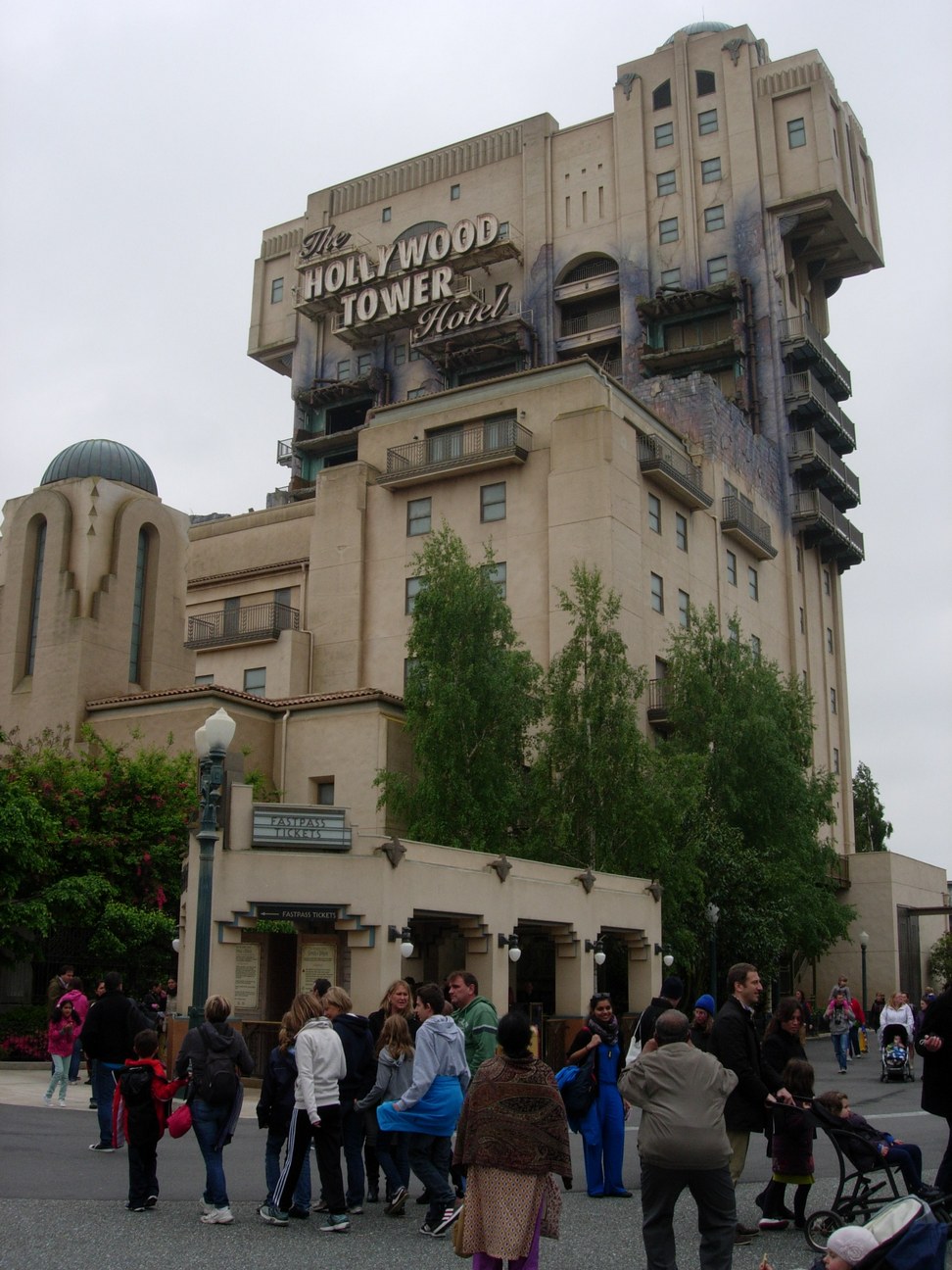
The Twilight Zone Tower of Terror

Saturday, 20 November 2010

European economic woes


The men in suits from the European Commission and the IMF have descended on Dublin. Ireland is in serious economic trouble. Its banks are virtually bust and its budget deficit (32%) is the worst in Europe. The Irish public are already enduring severe austerity measures including raised taxes and reduced salaries. The days when Ireland’s economy was known as the “Celtic Tiger” are truly over.

Ireland experienced a classic property boom from 2000 to 2006. During this time banks became reckless with their lending. Then when the bubble finally burst the loans turned bad, and the banks and the economy suffered. This has happened in other countries too. The problem for Ireland is that, being part of the single European currency (Euro), it doesn’t have the necessary tools, like devaluing its currency and lowering interest rates, to stimulate growth.

There are fears that the crisis in Ireland could spread to other European countries like Portugal and Spain. Hence the urgency to deal with the Irish crisis and avert a contagion that might result in another economic downturn. Unemployment within many European countries has increased and economic growth remains sluggish. Added to this are measures taken by governments to cut public spending in order to reduce their deficits. This is likely to slow economic growth further and result in more unemployment.

IMF

When the IMF gets involved, you know there are serious problems. This is an organisation which emerged at the end of World War II to assist the reconstruction of a devastated Europe. It was founded on the belief that markets often worked badly, and there is a need to put international pressure on countries to stop their economies going into a slump. Although the ideas and intentions behind it were good, the IMF has evolved into something very different today. It is now part of a new “Washington Consensus” – a consensus composed of itself, the World Bank and the US Treasury – that believes in market fundamentalism. It has made mistakes in all areas it has been involved: development, crisis management, and countries making the transition from communism to capitalism.

Nobel Prize winning economist Joseph Stiglitz says about the IMF in his book “Globalization and its discontents”:
“The Fund believes it is fulfilling the tasks assigned to it: promoting global stability, helping developing countries in transition achieve not only stability but also growth. Until recently it debated whether it should be concerned with poverty – that was the responsibility of the World Bank – but today it has even taken that on board as well, at least rhetorically. I believe, however, that it has failed in its mission, that the failures are not just accidental but the consequences of how it has understood its mission.”

Social contexts

The problem with many of the technocrats in institutions like the IMF is that they are short-sighted about the effects of their policies. They’re driven by a blind faith in markets. They often do not know a country well, yet propose solutions for that country as though they know everything about it. Globalization can be beneficial for many people, but it can cause a lot of misery too. One has to be mindful of the social contexts within countries before implementing policies; if not, policies can be counterproductive.

Cuts in government spending will inevitably increase unemployment. This has the potential of increasing social tension. It is important that governments are wary of this as they pursue deficit reductions. In Europe, far right nationalist parties have made gains in recent elections. The rise of the Third Reich before World War II occurred under very depressed economic conditions. Such conditions, as well as wounded national pride, provided a perfect platform for the Nazis to take control of Germany. While Europe is still a long way from the levels of fascism that led to World War II, history has shown far right parties are capable of exploiting economic downturns for their political advantage.

It’s likely the whole of Europe will experience low growth as a result of cuts in many countries. Severe austerity measures could even push the region back into recession, which will have global implications. The people likely to suffer the most are the poor. It’s important governments do not destroy basic safety nets. It remains to be seen if contagion is avoided and the single European currency will survive. Many economists predict a new “normal” of higher unemployment rates, lower growth and lower levels of public services. For countries like Ireland, their economic woes are just beginning.

Thursday, 18 February 2010

The Roman Empire and its lessons for Europe today

“I came. I saw. I conquered.” Those are the words of Julius Caesar, a key ruler of the Roman Empire, but they could easily have been the motto of Roman generals for centuries. They were infamous for their excesses of greed, lust, and cruelty; but the empire lasted more than six hundred years, during which time Rome managed to conquer and rule over two million square miles, stretching from the Rhine River to Egypt and from Britain to Asia Minor. In subsequent years it has been the example of empire that European powers with imperial ambitions have tried and often failed to imitate.

Although the Romans provided a degree of freedom and stability to its conquered subjects, they were often brutal rulers. Slavery was endemic, accounting for about a quarter of the Roman population. Rebellious slaves and dissidents were tortured and killed in spectacular fashion, ranging from crucifixion to a form of entertainment in amphitheatres. There was little concept of human rights. Yet all this was tolerated for many years, provoking only isolated instances of rebellion.

Controlling a vast expanse of land, covering Europe, West Asia and North Africa, the Roman Empire pulled together very diverse geographical landscapes and cultures. The Romans borrowed much from the Greeks, including their art, philosophy and literature. Roman religion was polytheistic. They were good soldiers, administrators, lawyers and engineers. They built long straight roads, connecting different parts of their empire, as well as elaborate water systems and public baths. They invented concrete, made of lime and sand, and built tall buildings.

The Romans did not look kindly on Christians, who refused to worship the pagan gods and partake in emperor worship. They were seen as stubborn and subversive, and were often persecuted, sometimes severely. Things eventually changed when Constantine became emperor in 324 AD as he favoured Christianity, and set in motion the process whereby Christianity would become the state religion of Rome. He moved his capital to Byzantium, on the boundary between Europe and Asia, and built a “New Rome,” which became known as “Constantinople” or “city of Constantine”.

The legacies of the Romans still endure with us today. In addition to preserving and building upon the Greek ideas of arts and literature, democracy, philosophy, theatre and free speech, Rome made many contributions of its own. The language of the Romans, Latin, formed the common root for the Romance Languages - Italian, Spanish, Portuguese, and French – and also influenced the Germanic languages. Their road and water systems were tremendous improvements over previous civilizations. Our modern legal systems, based on trial with a judge, plaintiff and defendant, are derived from Roman law. The final legacy of the Roman Empire is Christianity, which marked a significant change from the classical age. Due to well-paved and well-guarded roads, as well as flourishing trade, the circumstances favoured the spread of the religion.

Rome fell in 410 AD to the barbarians. The pagans blamed the Christians for Rome’s fall, while Christians blamed the pagans. Europe was plunged into centuries of cultural and economic decline known as the Dark Ages, for the relative lamp of civilisation that Rome offered was extinguished. The eastern section of the empire, which came to be known as the Byzantine Empire, lasted more than a thousand years until that eventually fell to the Ottoman Turks.

Augustine of Hippo, probably the greatest theologian in the western church, wrote The City of God, in which he claims that there are two cities, each built on love. The city of God is built on love of God, while the earthly city is built on love of self. In human history, these two cities appear mingled together but in fact they are irreconcilably different from each other. In the end only the city of God will remain. Meanwhile, human history is filled with kingdoms and nations, all built on love of self, which will all wither away no matter how powerful they may be. In the case of Rome, Augustine says, God allowed her and her empire to flourish so that they could serve as a means for the spread of the Gospel; but now that this purpose has been fulfilled, God has let Rome follow the destiny of all human kingdoms, which is no more than punishment for their sins.

The lessons of Rome are equally pertinent today. What we are almost definitely witnessing is another period of cultural and economic decline in Western Europe. Nearly all of these countries are mired in high levels of national debt that will take possibly a generation to pay back, not helped by an ageing population. Economic growth will inevitably be slower than in the past. Meanwhile, other countries such as China, India, Russia and Brazil are growing rapidly. It remains to be seen how far these countries rise and how far Western Europe falls, but the trend seems set. Almost five hundred years of Western European hegemony in the economic and cultural spheres of this world is coming to an end. This is not to say that their legacies won’t last, for those of Rome still last today. They may rise again in the future. As human history shows, nothing is permanent. Empires and nations will continue to rise and fall unceasingly throughout time.